Technology designed around your grantmaking and the organizations you support.
Grouptrail for funders: Flexible infrastructure for how you manage grants and help grantees scale their impact.
Grouptrail is a configurable grants management and collective impact platform for foundations and other funders. Manage grants, relationships, workflows, reporting, and learning while helping grantees, networks, and regional partnerships strengthen operations, coordinate programs, track outcomes, and scale their impact.
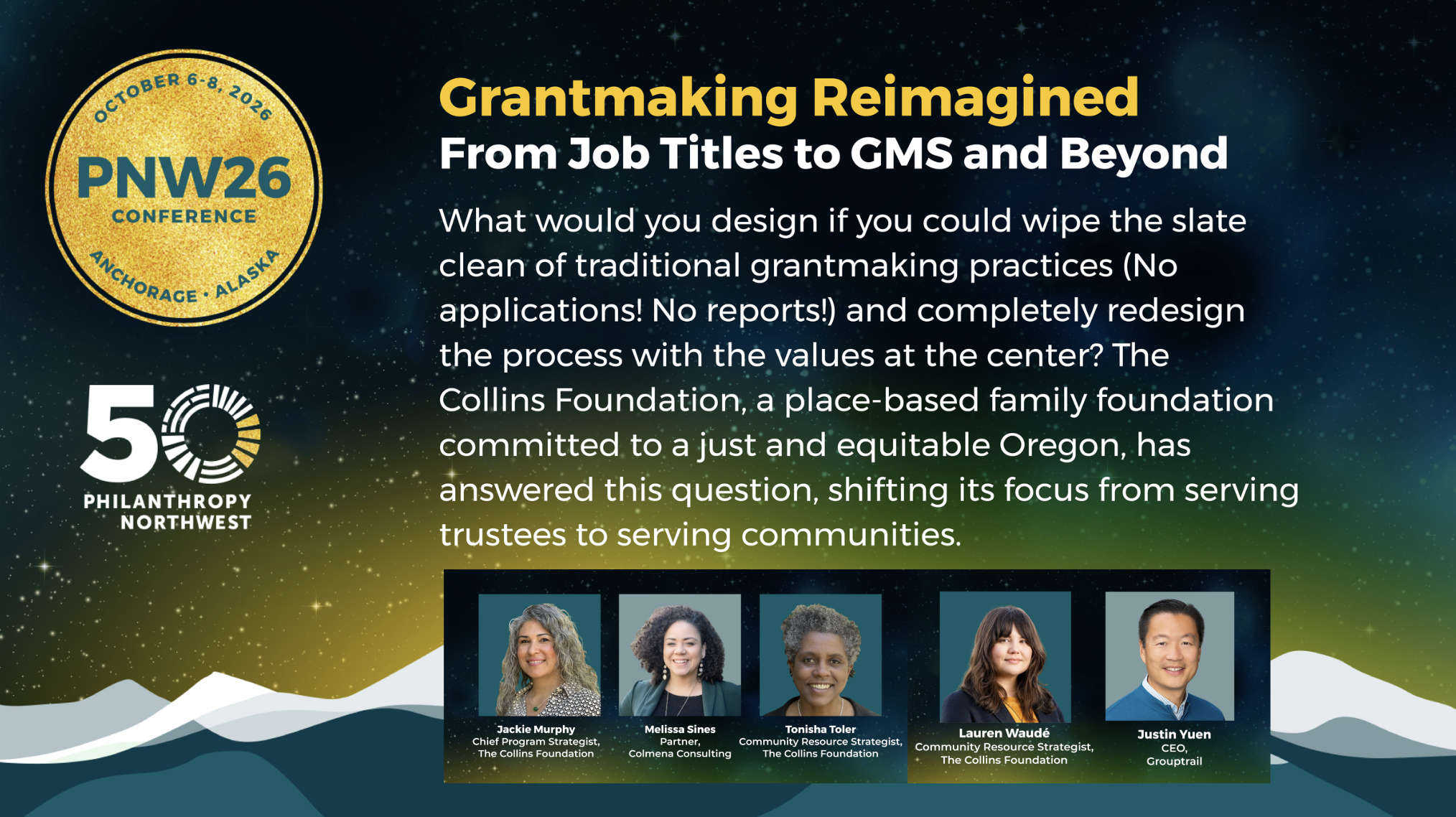
The Collins Foundation case study
Start with the work. Then design the technology.
Your technology should support the way you want to work—not determine it.
Grouptrail is a configurable platform for complex, people-centered work. We collaborate with organizations to turn their goals, relationships, workflows, data, and learning into technology designed around how the work actually happens.
For funders, that creates opportunities at multiple levels:
YOUR GRANTMAKING
Manage funding and relationships around your strategy.
ONE ORGANIZATION
Strengthen a grantee’s operational capacity.
A NETWORK OF ORGANIZATIONS
Help intermediaries coordinate and strengthen networks.
A REGIONAL INITIATIVE
Build shared infrastructure for collective impact.
One platform. Different community missions. Different levels of impact.
Grants management designed around your strategy.
What if you could design your grantmaking process before choosing the technology? Grantmaking is ultimately about relationships, communities, learning, and impact. But over time, systems can begin shaping the work itself: applications get designed around available fields, reporting requirements around existing templates, and workflows around what the software allows.
What if we reversed that?
Start with the experience you want to create for grantees, communities, staff, and partners. Then configure the technology around it.
See the whole relationship—not just the latest application.
Grouptrail connects information across the lifecycle of your relationships with organizations.
Relationships
See organizations, people, conversations, grants, activities, and longitudinal data together.
Flexible processes
Configure workflows around your approach—from organizational profiles, referrals, and conversations to applications, community review, multi-year funding, and beyond.
Less burden
Capture learning through relationships and everyday work—not just another report.
Connected work
Bring grants, communications, tasks, documents, decisions, and history together.
Learning and insights
Turn everyday grantmaking activity into useful quantitative and qualitative organizational knowledge.
What if applications and reports weren’t always the default?
Traditional grantmaking often follows a familiar cycle:
Application → Review → Award → Report → Repeat
Sometimes that’s exactly the right process. Sometimes it isn’t. What if you started by asking:
- What do we actually need to know?
- Who already has that information?
- Could staff gather some of it instead of asking organizations to provide it again?
- Could ongoing relationships replace some point-in-time reporting?
- Could information generated through the work itself become part of learning and evaluation?
Reducing administrative burden doesn’t mean eliminating accountability. It means designing better ways to create connection, learning, and accountability.
From values to systems
Imagine
What experience are you trying to create?
Consider grantees, applicants, community members, reviewers, board members, program staff, and partners—not just grants administrators.
Design
How should the work actually happen?
Decide what should be handled by people, what should happen collaboratively with communities and grantees, and where technology can make the work easier.
Build
What systems support those practices?
Configure relationships, workflows, data, communications, permissions, reporting, and integrations around the way you want to work.
Adapt
What are you learning, and what should change?
Your grantmaking evolves.
Your technology should be able to evolve with it.
One example: The Collins Foundation
The Collins Foundation has been rethinking its grantmaking practices around relationships, community, and reduced burden on nonprofits. That transformation has included reconsidering traditional applications and reporting, changing internal practices and roles, and creating new ways of learning alongside grantees.
Technology needed to change with those practices. Instead of starting with the limitations of a traditional grants management system, The Collins Foundation worked with Grouptrail and Colmena Consulting to translate its evolving approach into technology designed around the work.
The lesson extends beyond any particular feature: Decide how you want to work first. Then configure the technology to support it.
The Collins Foundation case study
And what about the work your grants make possible?
A funder can have excellent technology for managing a grant while the organization receiving that grant is managing the actual work through:
Spreadsheets + forms + email + shared drives + disconnected databases + point solutions
That’s an infrastructure challenge, too. Technology capacity can be capacity building. Grouptrail gives funders another way to think about technology investment:
What infrastructure could help the organizations we support operate, collaborate, learn, and scale their impact?
From one grantee to an entire region:
ONE ORGANIZATION
Strengthen a grantee’s operational capacity.
Help an organization move beyond disconnected systems with configurable infrastructure designed around how its work actually happens.
Grouptrail can connect: People + programs + services + goals + tasks + workflows + communications + partnerships + outcomes
What could that look like?
Imagine a youth-serving organization coordinating:
Referral → Enrollment → Coaching → Employer engagement → Work experience → Follow-up → Outcomes
Staff can understand what’s happening across participants and programs, know what needs attention next, communicate with people and partners, and turn everyday work into useful data.
The opportunity: Invest in the operational capacity behind the outcomes you’re funding.
A NETWORK OF ORGANIZATIONS
Help an intermediary coordinate and strengthen a network.
Some organizations aren’t delivering a single direct-service program.
They’re helping other organizations succeed.
Grouptrail can give intermediaries delivering technical assistance, capacity building, cohort programs, or collaborative initiatives infrastructure to coordinate work across multiple organizations while preserving the context of each one.
Connect: Organizations + relationships + goals + technical assistance + activities + peer learning + milestones + outcomes
What could that look like?
Imagine a regional intermediary supporting ten community organizations.
Each organization has its own:
- Goals
- Capacity needs
- Technical assistance
- Relationships
- Milestones
- Activities
- Outcomes
At the same time, the intermediary can understand progress across the cohort, coordinate support, identify common needs, and build shared learning.
The opportunity: Turn a collection of organizations into a connected learning and support network.
A REGIONAL INITIATIVE
Build shared infrastructure for collective impact.
The challenge gets even bigger when many organizations are working toward shared regional outcomes:
- Schools
- Community organizations
- Employers
- Colleges
- Public agencies
- Intermediaries
- Funders
Each may have different responsibilities, workflows, systems, and information—but the work is connected. Grouptrail can provide configurable infrastructure that helps partners coordinate around a common initiative without requiring every organization to operate exactly the same way.
Connect: Partners + participants + programs + coordinated workflows + communications + shared outcomes + learning + regional reporting
What could that look like?
Imagine a regional youth opportunity or workforce initiative.
Community organizations recruit and support participants.
Schools and colleges provide education and pathways.
Employers provide work experiences and jobs.
Intermediaries coordinate partners and technical assistance.
Funders invest in the ecosystem.
Grouptrail helps connect the operational work, appropriate information, shared outcomes, and learning across that ecosystem.
The opportunity: Help a regional strategy move from coordination meetings to coordinated action.
One platform. Different levels of impact.
GRANTEE
Operate the work.
Manage the people, programs, services, relationships, and outcomes behind the mission.
↓
NETWORK
Coordinate organizations and build shared learning.
Support multiple organizations while preserving their individual context.
↓
REGION
Connect partners, outcomes, and strategy.
Create shared infrastructure for organizations working toward common goals.
Infrastructure for scalable regional collective impact.
Grouptrail’s configurable workflows, permissions, communications, data integrations, and reporting make it possible to support each level without requiring every organization to work exactly the same way.
Different missions don’t require identical systems.
A shared platform doesn’t have to mean a standardized program.
One organization might coordinate youth workforce pathways.
Another might manage family and community services.
Another might operate community schools.
Another might deliver technical assistance across a cohort.
Another might coordinate work-based learning.
And a regional initiative might connect several of them around shared outcomes.
Grouptrail provides a common configurable foundation while allowing workflows, permissions, forms, communications, data, and reporting to reflect how each organization actually works.
One configurable platform. Different community missions.
Turn everyday work into useful data.
Traditional funder reporting can create a separate layer of work:
Do the work → reconstruct what happened → complete another report
But when useful information is captured through everyday operations, organizations can use that information first for themselves.
Staff know what needs attention.
Managers understand what’s happening across programs.
Networks identify common needs.
Regional initiatives understand progress toward shared goals.
And appropriate information can contribute to funder reporting and shared learning.
Work → Data → Learning → Outcomes
instead of
Work → Reporting burden
Shared infrastructure doesn’t mean shared access to everything.
Better-connected systems should not mean that a funder automatically sees every participant record, case note, communication, or operational detail.
Different people and organizations need different levels of access.
Grouptrail’s configurable permissions can support collaboration while maintaining appropriate boundaries between:
- Grantee operational data
- Network and partner information
- Shared outcomes and learning
- Funder reporting
The goal is to make collaboration and learning easier—not turn capacity building into surveillance.
What could better infrastructure make possible?
There isn’t one starting point. You might be asking:
How could our grants management system better reflect the way we want to practice grantmaking?
Start with Grouptrail for your grantmaking.
How could we strengthen the operational capacity of organizations we fund?
Start with Grouptrail for individual grantees.
How could an intermediary better support a portfolio or cohort of organizations?
Start with Grouptrail for networks.
How could organizations across a region coordinate around shared goals and outcomes?
Start with Grouptrail for regional initiatives.
Or connect more than one.
Try the PNW26 activity
At Philanthropy Northwest’s PNW26 conference, we’re inviting participants to temporarily set aside their existing technology and processes and start somewhere else:
IMAGINE
If you weren’t constrained by your current systems:
What would you want the experience to look and feel like?
DESIGN
For one part of that experience, ask:
What should the community carry?
What should your organization carry?
What should technology carry?
ACT
Identify one assumption in your current process that you could test.
What’s one small change you could try?
Then take the question one step further:
What are the organizations you support carrying today that better infrastructure could carry for them?
Start with what you’re trying to make possible.
You don’t have to begin with a list of software requirements.
Bring us a grantmaking process you want to rethink.
A grantee struggling with operational infrastructure.
A network that needs better ways to coordinate and learn.
A regional initiative trying to connect partners around shared outcomes.
Or an idea you’re not yet sure how to implement.
We’ll start with the work and explore how technology could support it.