Workforce Pell data toolkit
A practical, infrastructure‑ready guide for colleges preparing for Workforce Pell implementation.
View and download the toolkit here
Learn more about Grouptrail Workforce Pell

Your guide to data collection, integration, and reporting
Workforce Pell introduces new expectations for program eligibility, employer validation, noncredit data tracking, and reporting. Most colleges lack the unified systems needed to meet these requirements. This toolkit from Grouptrail provides colleges with:
- Standardized data definitions
- Structured data collection templates
- A systems integration blueprint
- A reporting framework
- A data governance model
- A data quality & audit readiness checklist
- An equity‑focused data tracking guide
It is designed to help colleges build the data infrastructure required for Workforce Pell — and to support CIOs, IR teams, workforce leaders, and state system offices in aligning their efforts.
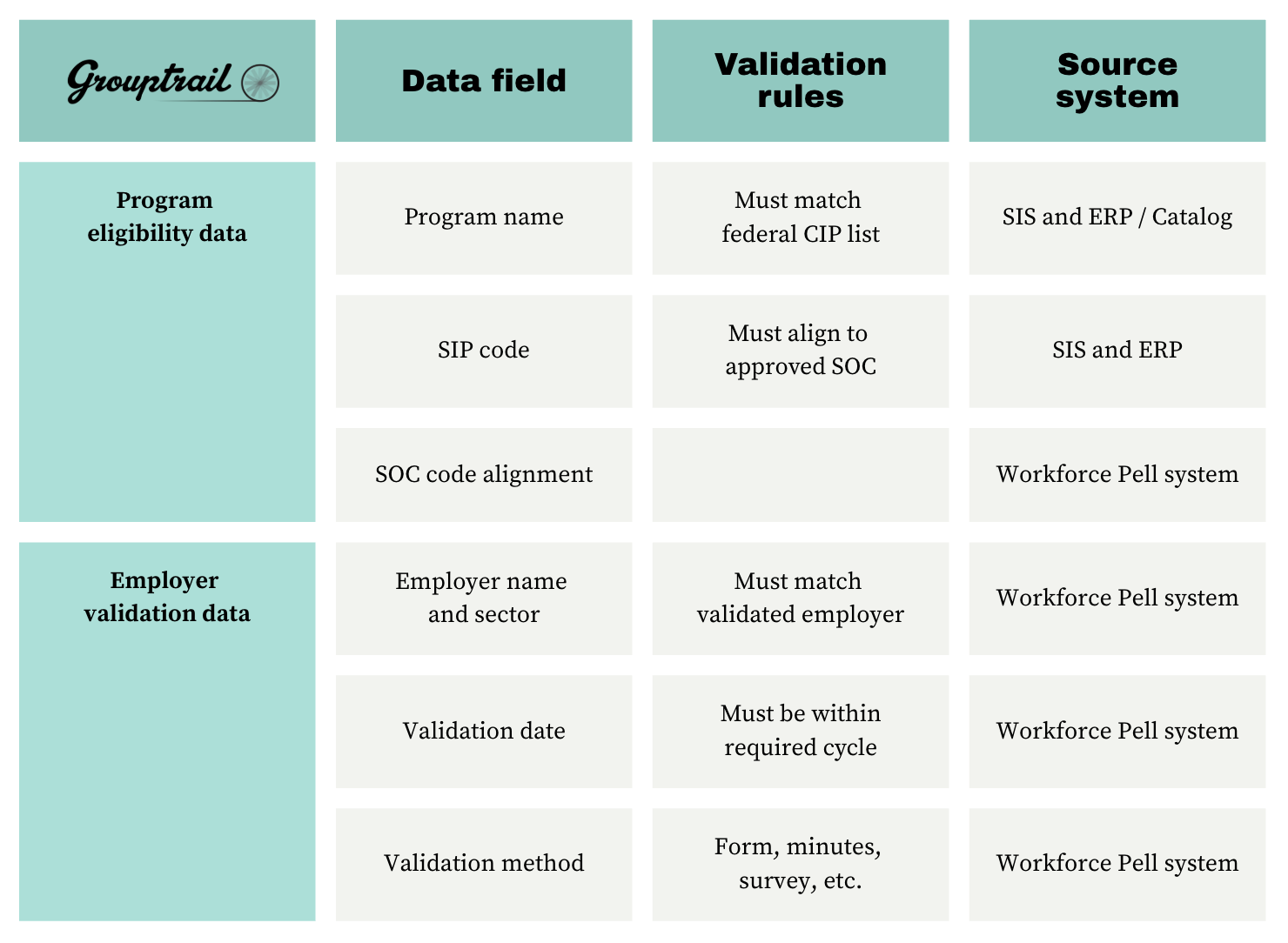
Data standards and definitions guide
Colleges must demonstrate that short-term programs lead to degree pathways, with clear credit alignment and transferability. This requires systems that can track, visualize, and document how noncredit and credit programs connect. Establishing clear, consistent, and institution‑wide data standards is foundational to any successful Workforce Pell strategy. Without shared definitions, structured fields, and aligned data formats, colleges risk fragmented reporting, inconsistent program eligibility determinations, and gaps that undermine audit readiness.
This Data Standards & Definitions Guide provides a unified framework for how Workforce Pell data should be captured, validated, and maintained across systems and departments. By grounding institutional practice in common data language and rigorously defined elements, colleges can ensure accuracy, interoperability, and the seamless integration required to support both compliance and long‑term decision‑making.
Data collection templates
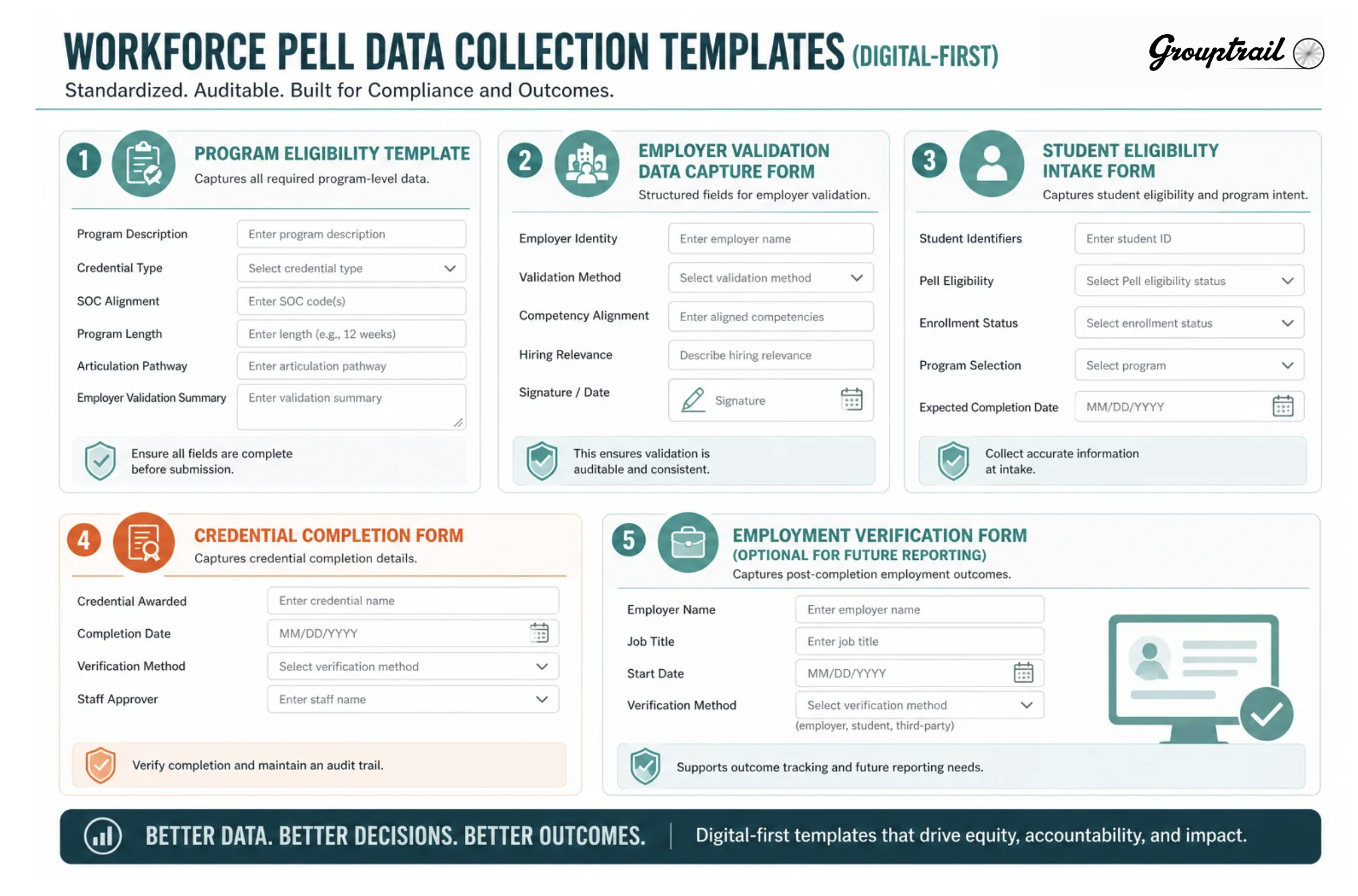
Effective Workforce Pell implementation depends on colleges’ ability to capture clean, structured, and interoperable data at every stage of the student, program, and employer lifecycle. The framework below is designed to replace the fragmented PDFs, spreadsheets, and ad‑hoc documents that currently limit data quality and reporting accuracy across institutions. By standardizing inputs and aligning them with Workforce Pell requirements, this approach enable colleges to build a reliable data foundation—one that supports seamless integration with ERP environments, strengthens audit readiness, and ensures that institutional leaders can make informed, equity‑centered decisions as Workforce Pell scales.
ERP integration blueprint
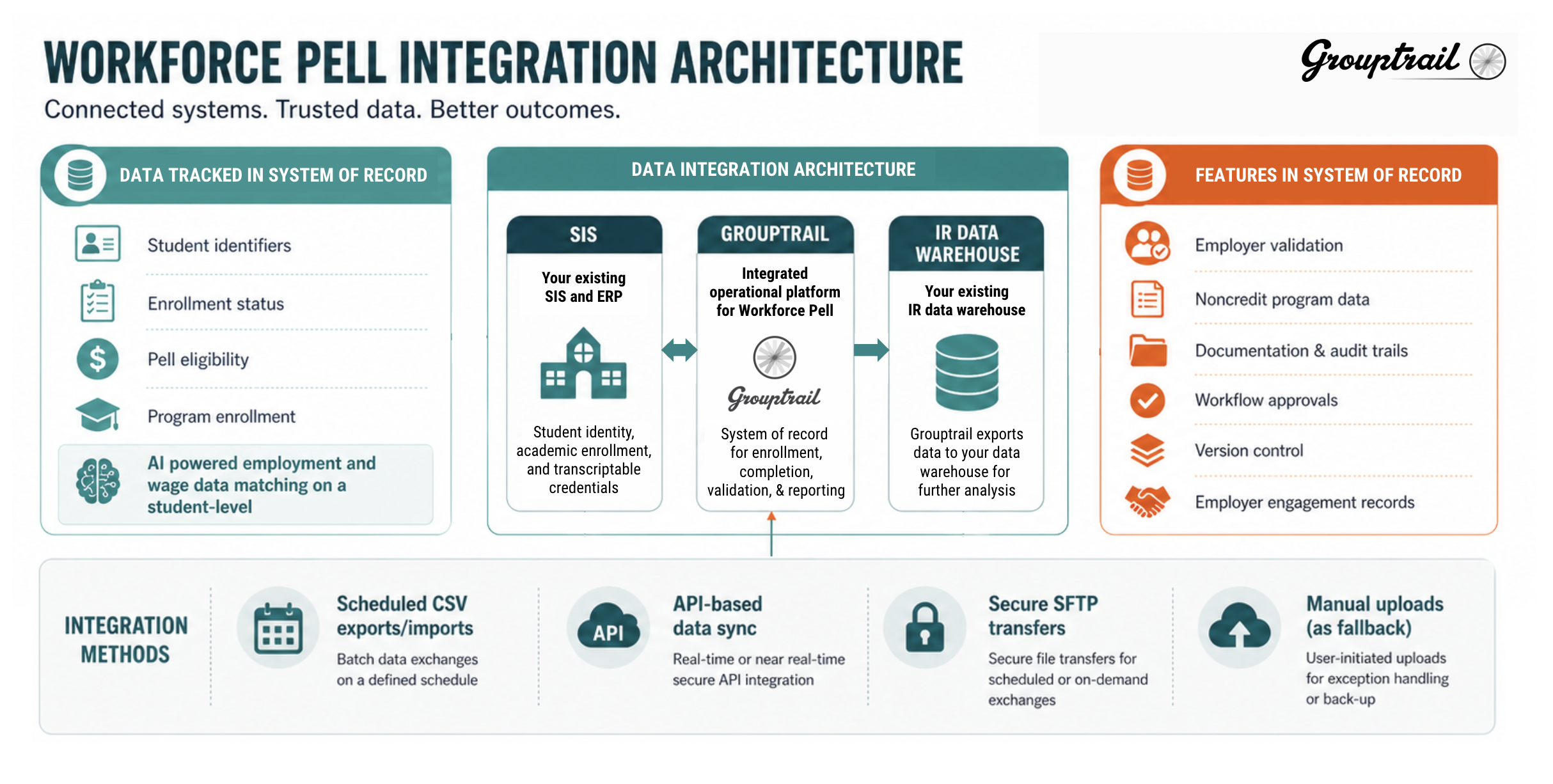
A coherent Workforce Pell strategy requires more than compliant forms and isolated data collection—it depends on the seamless movement of accurate, structured information across institutional systems. The ERP Integration Blueprint outlines how Workforce Pell data should flow between operational platforms, student information systems, AI powered employment and wage data matching on a student-level, institutional reporting environments to ensure consistency, reduce duplication, and strengthen audit readiness. By clarifying data ownership, mapping integration points, and defining the technical pathways for interoperability, this blueprint helps colleges build a sustainable digital infrastructure capable of supporting Workforce Pell at scale while aligning with broader institutional data governance priorities. Below is an example of what this might look like, though every institution may have some differences.
Reporting framework
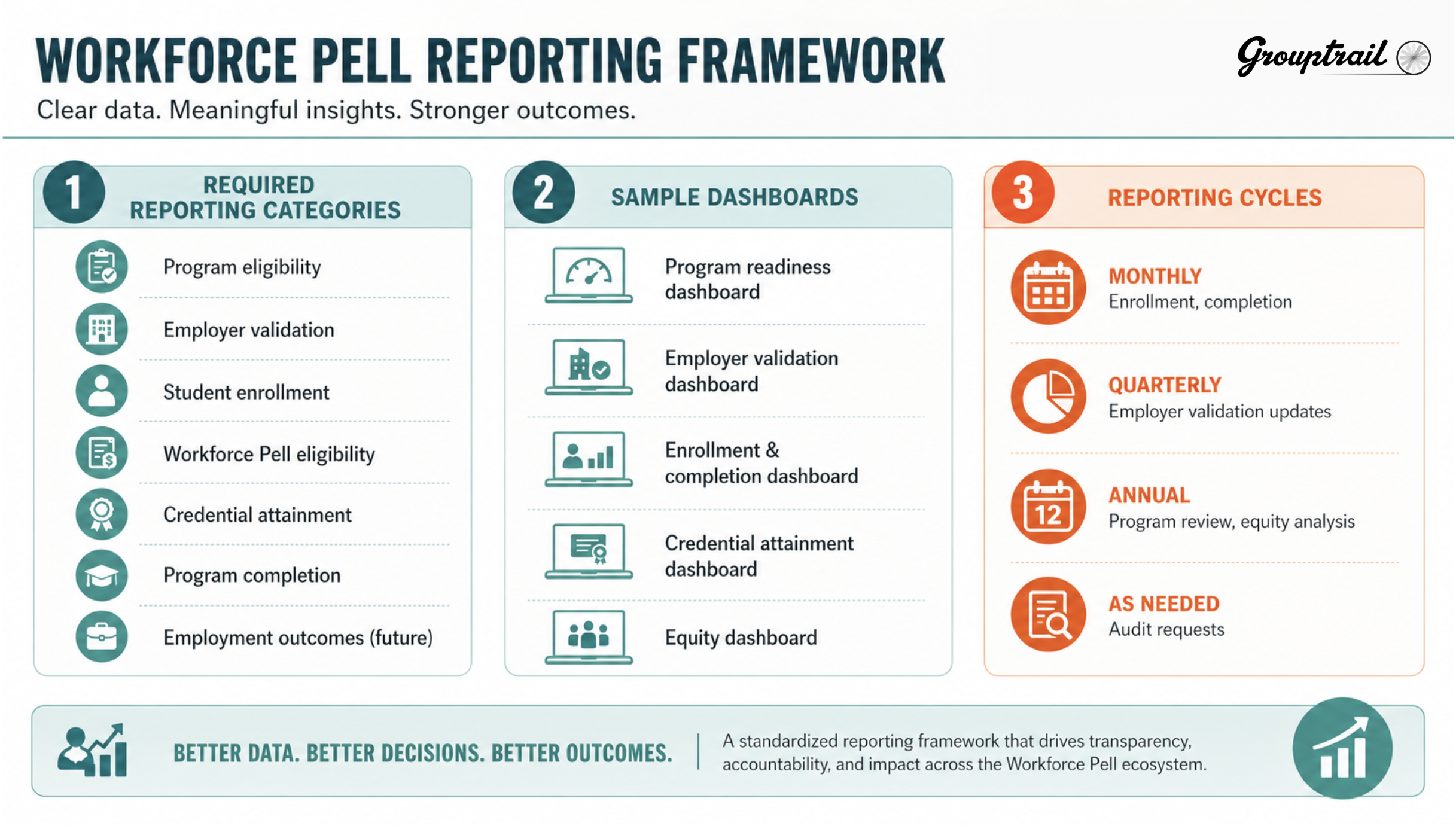
Robust reporting is the mechanism through which Workforce Pell data becomes actionable—transforming raw information into insights that support compliance, institutional decision‑making, and continuous improvement. The Workforce Pell Reporting Framework provides colleges with a structured approach to organizing, analyzing, and presenting the data required for federal and state reporting, program review, and equity monitoring. By outlining essential metrics, recommended dashboards, and reporting cycles, this framework helps institutions move beyond transactional data submission toward a more strategic, transparent, and evidence‑driven model of Workforce Pell implementation. It ensures that leaders have the clarity and confidence needed to demonstrate program quality, respond to audits, and guide institutional planning as Workforce Pell scales.
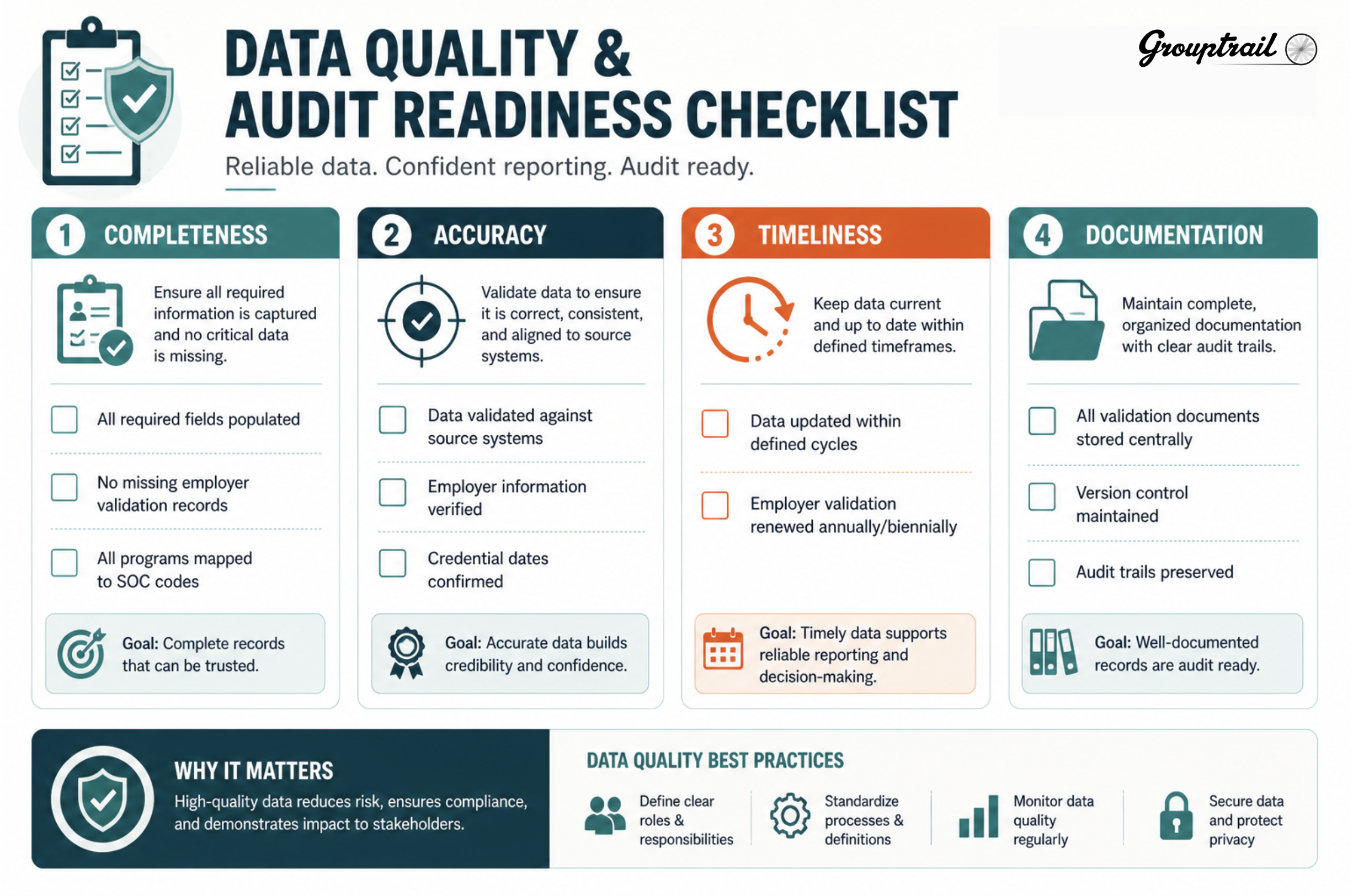
Data quality and audit readiness checklist
Ensuring the integrity of Workforce Pell data requires a disciplined approach to data quality, documentation, and audit preparedness. As federal and state agencies increase their expectations for transparency and verification, colleges must be able to demonstrate not only that required data elements are collected, but that they are accurate, complete, and consistently maintained across systems and departments. The Data Quality & Audit Readiness Checklist provides institutions with a structured framework for evaluating their current practices, identifying gaps, and establishing the controls necessary to withstand external review. By embedding these quality standards into routine operations, colleges can reduce compliance risk, strengthen institutional accountability, and build long‑term confidence in their Workforce Pell reporting infrastructure.
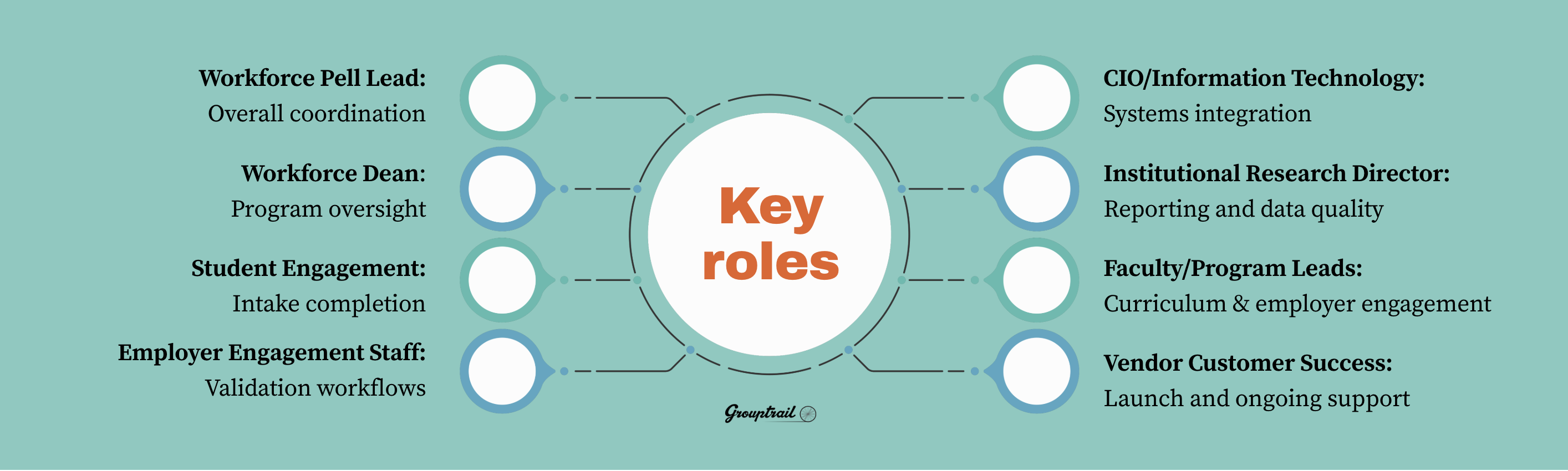
Data governance and roles map
Effective Workforce Pell implementation requires more than accurate data and well‑designed systems—it depends on clear governance structures that define who is responsible for what, and when. As colleges navigate new requirements spanning program eligibility, employer validation, noncredit data tracking, and reporting, the absence of explicit roles and decision‑making pathways can lead to inconsistencies, bottlenecks, and compliance risk. The Data Governance & Roles Map provides a structured framework for assigning ownership, clarifying workflows, and establishing institutional accountability across departments. By articulating these roles and responsibilities, colleges can ensure that Workforce Pell data is managed with rigor, transparency, and alignment to broader institutional governance practices.
Equity data tracking guide
Advancing equity is central to the promise of Workforce Pell, and colleges must be able to demonstrate not only who is being served, but how outcomes vary across student groups, programs, and employer partnerships. Meaningful equity work requires more than disaggregated reporting—it demands intentional, consistent, and institution‑wide practices for capturing, analyzing, and acting on data that illuminate disparities in access, progression, credential attainment, and employment outcomes. This Equity Data Tracking Guide provides a structured approach for integrating equity considerations into every stage of Workforce Pell implementation, ensuring that institutions can identify gaps, monitor progress, and design interventions that support fair and inclusive pathways into high‑quality workforce programs.

Aligning with WBL apprenticeship, and state reporting
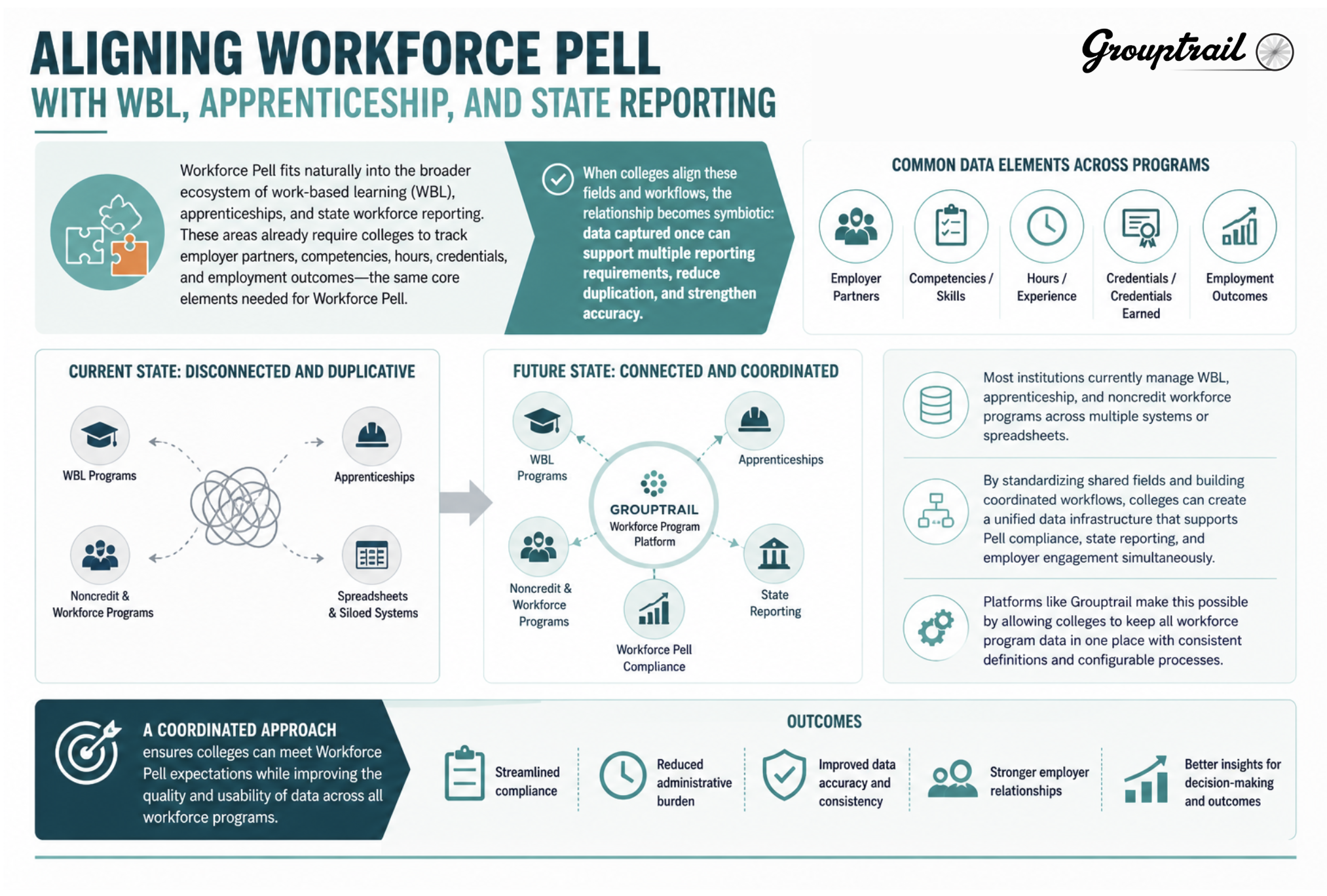
Workforce Pell fits naturally into the broader ecosystem of work‑based learning (WBL), apprenticeships, and state workforce reporting. These areas already require colleges to track employer partners, competencies, hours, credentials, and employment outcomes—the same core elements needed for Workforce Pell. When colleges align these fields and workflows, the relationship becomes symbiotic: data captured once can support multiple reporting requirements, reduce duplication, and strengthen accuracy.
Most institutions currently manage WBL, apprenticeship, and noncredit workforce programs across multiple systems or spreadsheets. By standardizing shared fields and building coordinated workflows, colleges can create a unified data infrastructure that supports Pell compliance, state reporting, and employer engagement simultaneously. Platforms like Grouptrail make this possible by allowing colleges to keep all workforce program data in one place with consistent definitions and configurable processes.
A coordinated approach ensures colleges can meet Workforce Pell expectations while improving the quality and usability of data across all workforce programs.
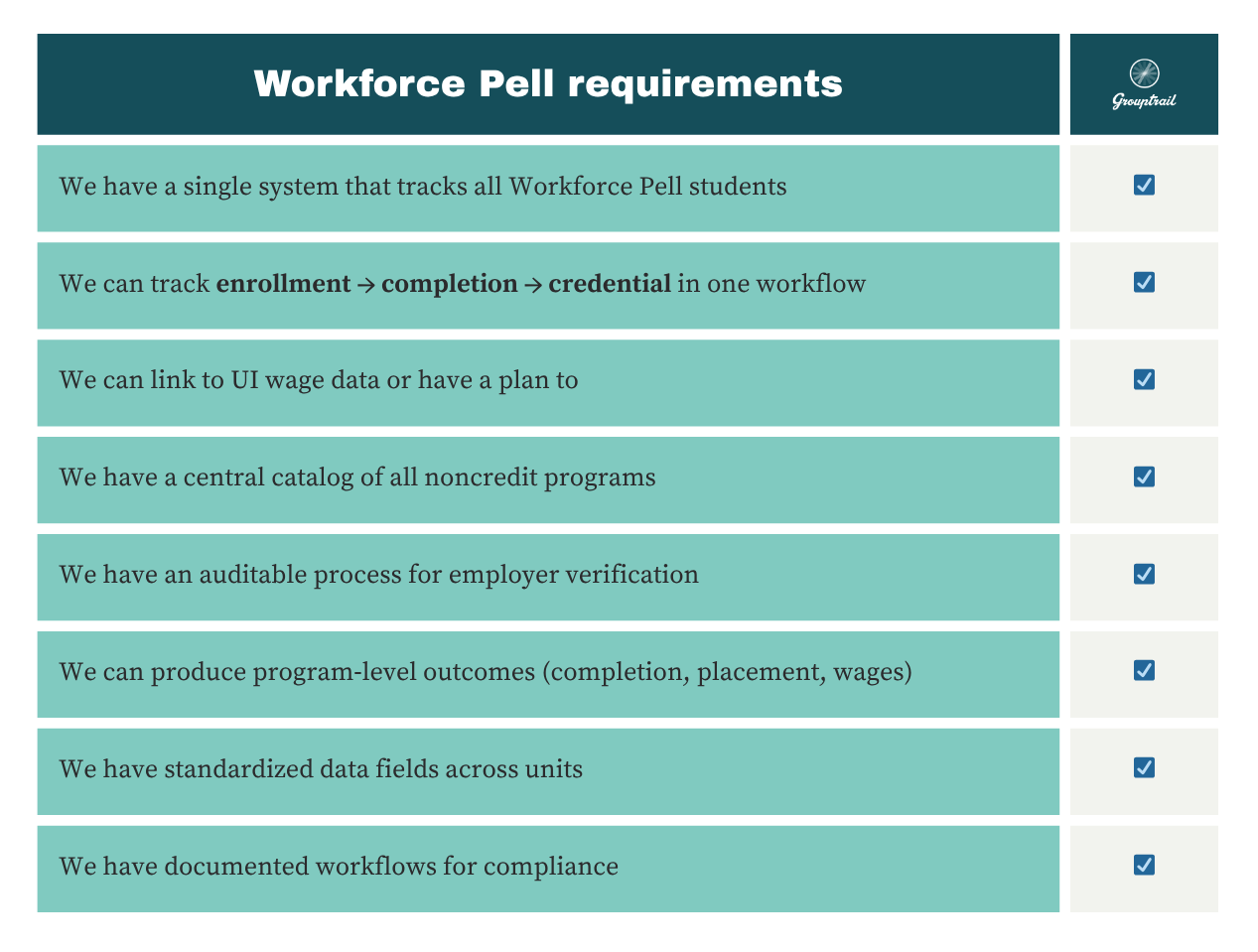
Readiness checklist
The Workforce Pell Readiness Checklist distills the essential operational, data, and governance components institutions must have in place. Designed as a practical companion to the broader toolkit, this checklist enables colleges to quickly assess their current state, identify gaps, and prioritize the actions required to ensure compliance, data integrity, and cross‑departmental alignment. By grounding preparation in clear, measurable indicators, the checklist supports institutions in building a coherent and sustainable approach to Workforce Pell that strengthens both student pathways and institutional accountability.
How Grouptrail supports this toolkit
Grouptrail can serve as the flexible and customizable operational system of record hub for:
- Employer validation
- Program eligibility workflows
- Noncredit program data
- Documentation & audit trails
- Reporting dashboards
- ERP integration
Grouptrail is the infrastructure layer partner for colleges to power Workforce Pell data collection, integration, and reporting.
Grouptrail imports from and integrates with existing systems like Ellucian Colleague and Banner, allowing colleges to sync data across CRMs, ERP platforms, state labor data, and other related workforce systems. Reduce administrative burden and create a smoother experience for both staff and learners. That means:
- No more entering the same data in multiple places
- Seamless data flow across departments
- A single source of truth for Workforce Pell
Eliminate duplicate data entry. Connect your systems. Simplify Workforce Pell. All in Grouptrail. Proven and tested since 2004.
Next step: Request a Workforce Pell readiness session
If you want help implementing the toolkit, we offer a free 30‑minute session to walk through your current systems and identify the fastest path to readiness:
Learn more about Grouptrail Workforce Pell
Workforce Pell knowledge center
Workforce Pell Readiness Checklist
- Workforce Pell Readiness Hub
- Sinclair Community College case study
- The major data problem in noncredit and workforce programs
- What a Workforce Pell–ready system looks like
- Free Workforce Pell Workflow Mapping Session
- State‑Level Workforce Pell Requirements
- Workforce Pell for Presidents
- Workforce Pell for Workforce Deans
- Workforce Pell for Institutional Research
- Workforce Pell for Career Services
- Workforce Pell for WBL/Apprenticeship Coordinators
- Workforce Pell for IT leaders
- Workforce Pell for California
- Workforce Pell for Connecticut
- Workforce Pell for Illinois
- Workforce Pell for Maine
- Workforce Pell for Massachusetts
- Workforce Pell for New York
- Workforce Pell for North Carolina
- Workforce Pell for Ohio
- Workforce Pell for Oregon
- Workforce Pell for South Carolina
- Workforce Pell for Texas
- Workforce Pell for Washington